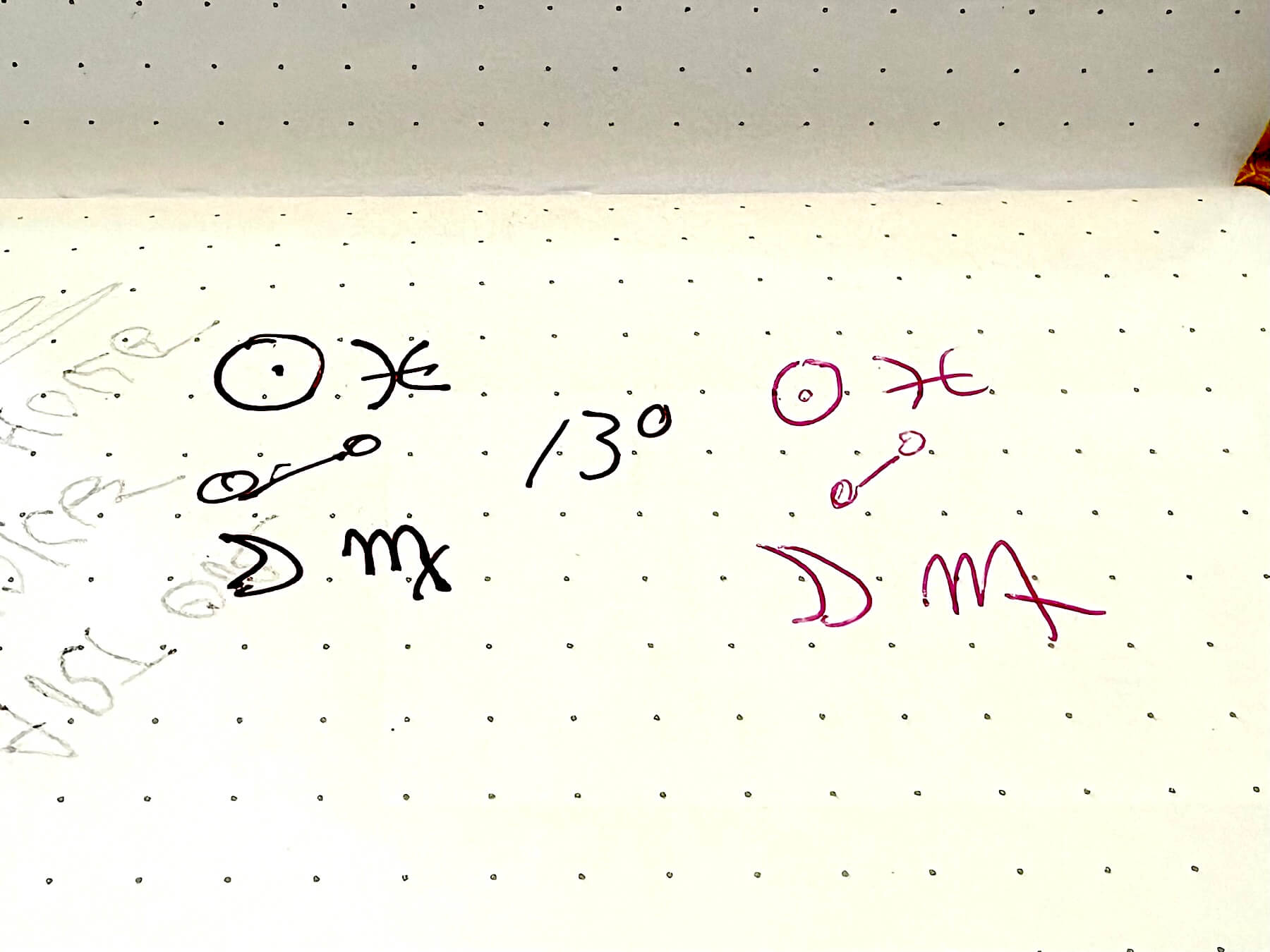
That I’ve been writing
horoscopes and related material for a while? Sure. That I get to spend a portion of my time in consultation with actual people? That helps. The almost random appearance of certain types, that shows up frequently? OK.
Patterns emerge. The most recent?
Four Degrees.
Drilling down on that idea?
Four Degrees of
Aries.
Four Degrees
There was an
eclipse, the Lunar New Year — Fire Horse — started, and Saturn closely followed Neptune entering the
tropical zodiac sign of Aries. Mercury is in a
watery retrograde cycle, just to add an element of confusion, already prefigured with Neptune and its influence.
Horoscopes for 2-17-2026…
Horoscopes for 3-3-2026…
What showed up, repeatedly in recent weeks?
Four Degrees
Perhaps a dozen years past? I had a procedure for
carpal tunnel on my left hand. An in-office procedure, nip and tuck, a handful of pain pills, plus a new fishing rod/reel and an alternative mouse arrangement — trackpad, no more mouse? No more problem.
Last doctor check-up, the capable PA answered a question about a sore elbow: repetitive stress injury, similar to that old carpal tunnel. Simple enough, I adjust my working position, and it goes away.
Still? That sore elbow?
That’s what the Saturn/Neptune, looking around and gesturing at everything, that’s what this is about and the place where this hits hardest?
4°.
Four degrees. It’s that sore spot that a simple adjustment can fix.
Four Degrees
Grabbing an ephemeris, Saturn hits 4° of Aries around 3/20 moving to 5° around 3/29, rough numbers, as an approximation.
Slower moving Neptune hits 4° Aries in late May, turning stationary and then backwards in July, staying in retrograde motion until December, arriving back at that 1°
Aries.
The American Ephemeris for the 21st Century
Realistically, the first
four degrees of Aries, and by extension, all the cardinal signs (Aries, Cancer, Libra, Capricorn) will feel its influence. Realistically, though, the sensitive points for this time is that first
Four Degrees, and more pointedly, as with Saturn, it’s that first few degrees of Aries.
Digging around, I found that I did post about this, a while back, about
two transits. At the end of the post, there’s the long form of my (dated) assessment of
Saturn conjunct the Sun, and
Neptune conjunct the Sun. That applies, over this next three-four months, to the first few degrees of all cardinal signs, in varying stages, but more so? For the first
Four Degrees of Aries. As noted.
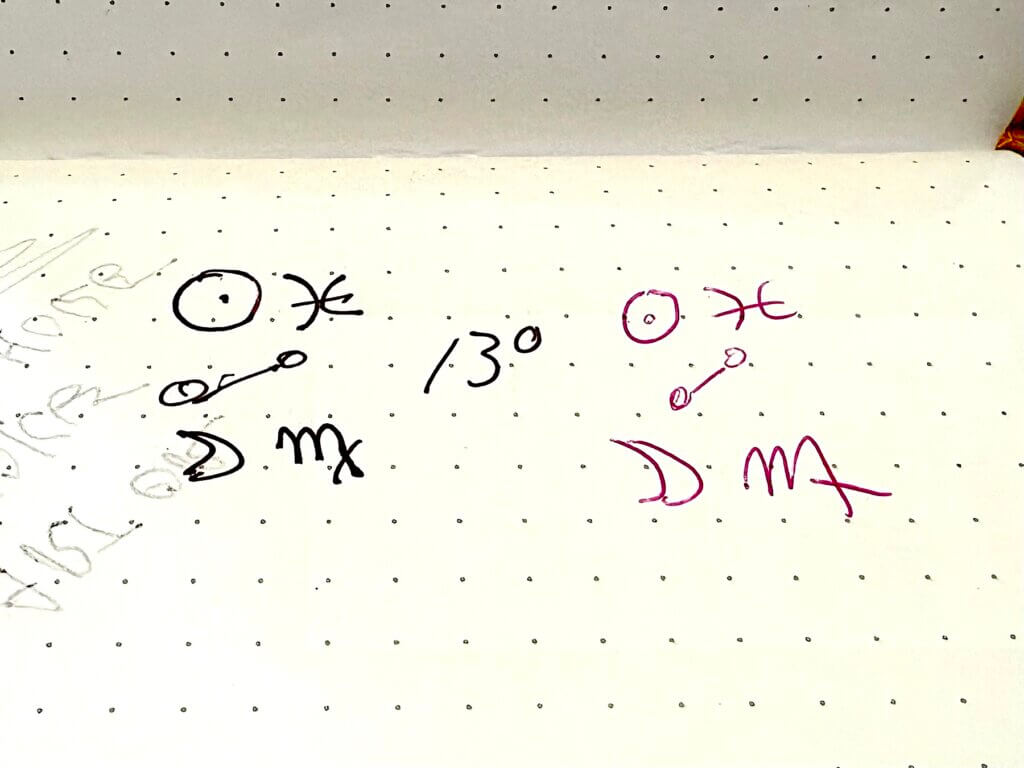
More as an aside, rather than as a hard-and-fast rule, but as a sidebar item? The fire signs, Aries, The Leo, Sagittarius? Especially the flaky Sagittarius and stalwart Leo?
The Leo? The fire signs gain clarity through this as it is a trine.
Aries? Good thing ya’ll like hard work.
 That I’ve been writing horoscopes and related material for a while? Sure. That I get to spend a portion of my time in consultation with actual people? That helps. The almost random appearance of certain types, that shows up frequently? OK. Patterns emerge. The most recent? Four Degrees. Drilling down on that idea? Four Degrees of Aries.